Maldivian scholars reflect on Country, culture and creativity ahead of NAIDOC Week
Posted: 7 July 2026
Ahead of NAIDOC Week 2026 (5–12 July), Australia Awards scholars from Maldives have been learning first-hand about Australia’s First Nations peoples. NAIDOC Week is an annual celebration of the cultures, histories and achievements of Aboriginal and Torres Strait Islander peoples.
Shortly before returning to Maldives as an alumnus, then-scholar Muhammad Nazeeh travelled to South Australia’s Ikara-Flinders Ranges National Park from 22 to 25 May to learn about the Adnyamathanha people under the guidance of John Solar, a Yura man and Adnyamathanha cultural educator.
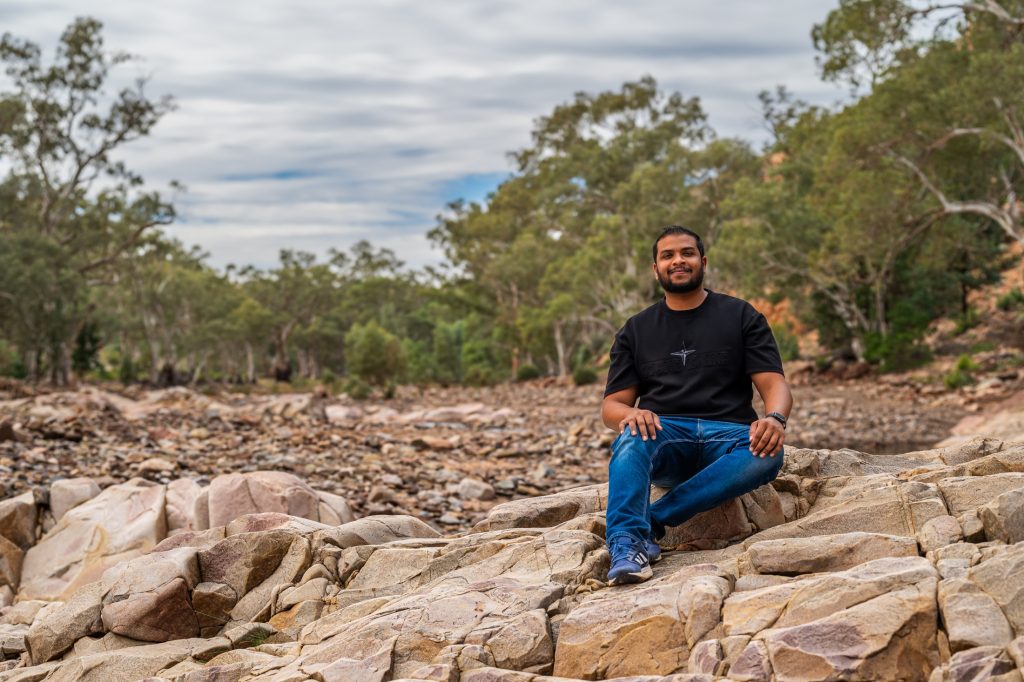
Alumnus Nazeeh pictured at the Ikara-Flinders Ranges National Park.
John shared insights into Adnyamathanha traditions, contemporary practices and connection to Country, including through the joint management of Ikara-Flinders Ranges National Park. He shared Yura Muda (creation stories), highlighted how Adnyamathanha people use plants for food, ceremony and medicine, and explained the significance of ancient rock art.
For Nazeeh, the visit provided valuable insights into Indigenous leadership, wellbeing and community practices.
“One of the key lessons I took away was the importance of inclusive and consultative leadership,” he says. “While there were recognised leaders, decision-making was often informed by individuals with specialised knowledge and expertise, such as healers, navigators and other skilled members of the community. This demonstrated that effective leadership is not solely about authority, but also about recognising and valuing diverse expertise within a group. I believe contemporary leadership and organisational structures can benefit greatly from reflecting on this approach by encouraging collaboration and drawing upon specialised knowledge when making decisions.”
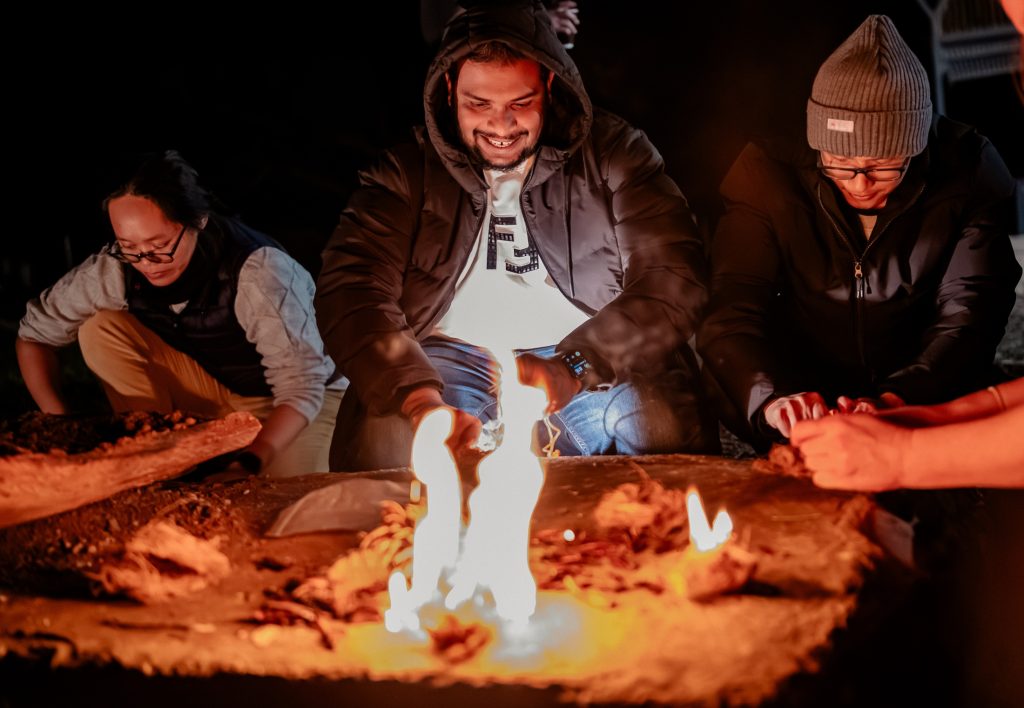
Nazeeh and other scholars try their hand at making fire under John’s guidance
Nazeeh was inspired by the environmental stewardship of the Adnyamathanha people and their care for Country. “In today’s fast-paced world, characterised by constant distractions and competing demands, it was inspiring to learn how Indigenous peoples intentionally nurtured their relationship with the natural environment and prioritised spiritual wellbeing. This connection appeared to provide clarity, purpose and a deep sense of contentment,” he says. “The experience highlighted for me the importance of making deliberate time for reflection, connecting with nature, and prioritising personal wellbeing in order to maintain balance and resilience in both personal and professional life.”
In June, three Maldivian Australia Awards scholars participated in two online weaving workshops led by Ronnie Jordan, a Pitta Pitta Wangkamahdla woman, artist, weaver and cultural facilitator. To support the hands-on nature of the workshops, scholars received weaving materials in advance and used them to follow Ronnie’s step-by-step guidance during the sessions.
Across the sessions, Ronnie explained the role of weaving in Aboriginal cultures as both a practical skill and a way of sharing knowledge. She described how weaving is connected to Country, family, stories and cultural identity, and how these practices continue to support learning and wellbeing today.
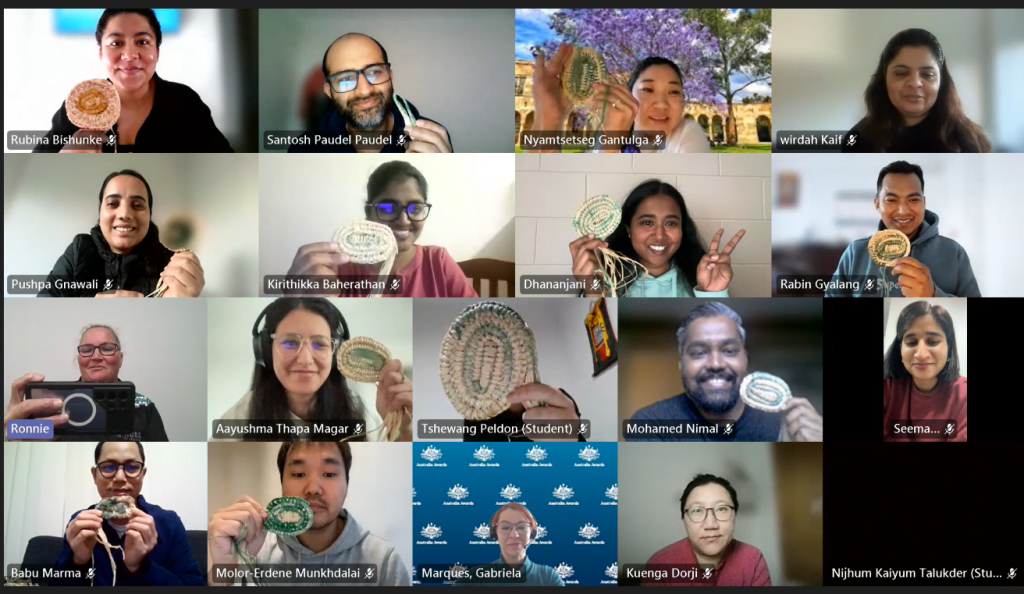
Scholars, including Maldivian Mohamed Nimal (third row down, second from right), show their progress during the weaving workshop.
Scholars learnt how natural fibres are gathered and prepared, and how different materials are used depending on Country, season and availability. Ronnie also shared examples of traditional woven tools, including fish traps, baskets and nets, highlighting the knowledge, care and sustainability embedded in these practices.
The workshops combined cultural learning with hands-on activity. As scholars began their own woven pieces, they were encouraged to slow down, breathe and enjoy the process, gaining a deeper appreciation of First Nations knowledge through a practical and reflective experience.
These activities built on First Nations engagement opportunities offered to scholars during the Scholars Symposiums held across Australia from October through to December 2025. These included art lessons with Indigenous teachers in Melbourne and Sydney, learning about Indigenous art at the Art Gallery of South Australia, and taking part in a city walking tour in Adelaide. Reflecting on her experience in Melbourne when she was a scholar, Maldivian alumna Aishath Naseem said, “I connected with the Indigenous art session in a way that I didn’t expect to.”
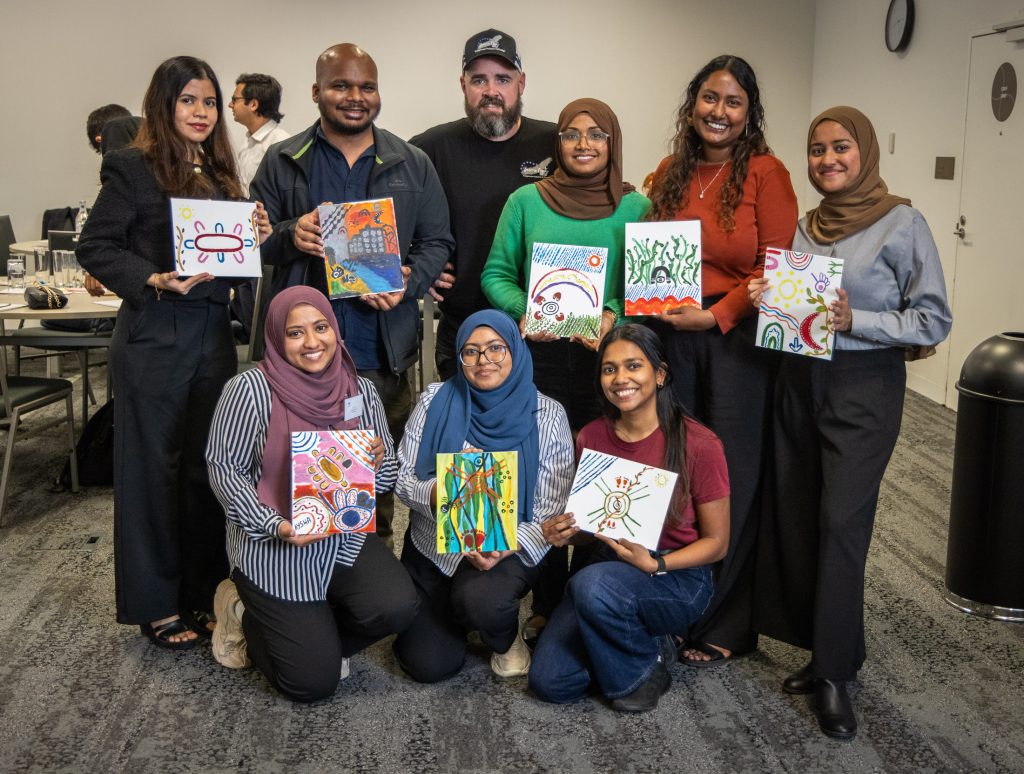
Maldivian scholars with Indigenous artist Rhys Jeffs during the Scholars Symposium in Melbourne in November 2025.
Collectively, these experiences gave the scholars practical and reflective ways to engage with First Nations Australians and learn about their cultures and knowledge systems. As NAIDOC Week approaches, their reflections highlight how cultural learning can deepen respect and create connections across countries and communities.